YOUNG SAMURAI
Japanese jujutsu for children 6 to 12. Osborne Park, Perth.
What this is
Young Samurai is a children's jujutsu programme at Self Defence Central Dojo.
It isn't a holiday activity or a games class with a belt at the end. It's the same Japanese jujutsu the adults train here — Goshin Jujutsu — structured for children, taught at a child's pace, and graded through a real junior syllabus.
Children learn how to fall without hurting themselves, how to move, how to use position and leverage instead of strength. Over time, they learn to defend against grabs, punches, and kicks. They do it in small classes, with instructors who know each child by name
Who teaches it?
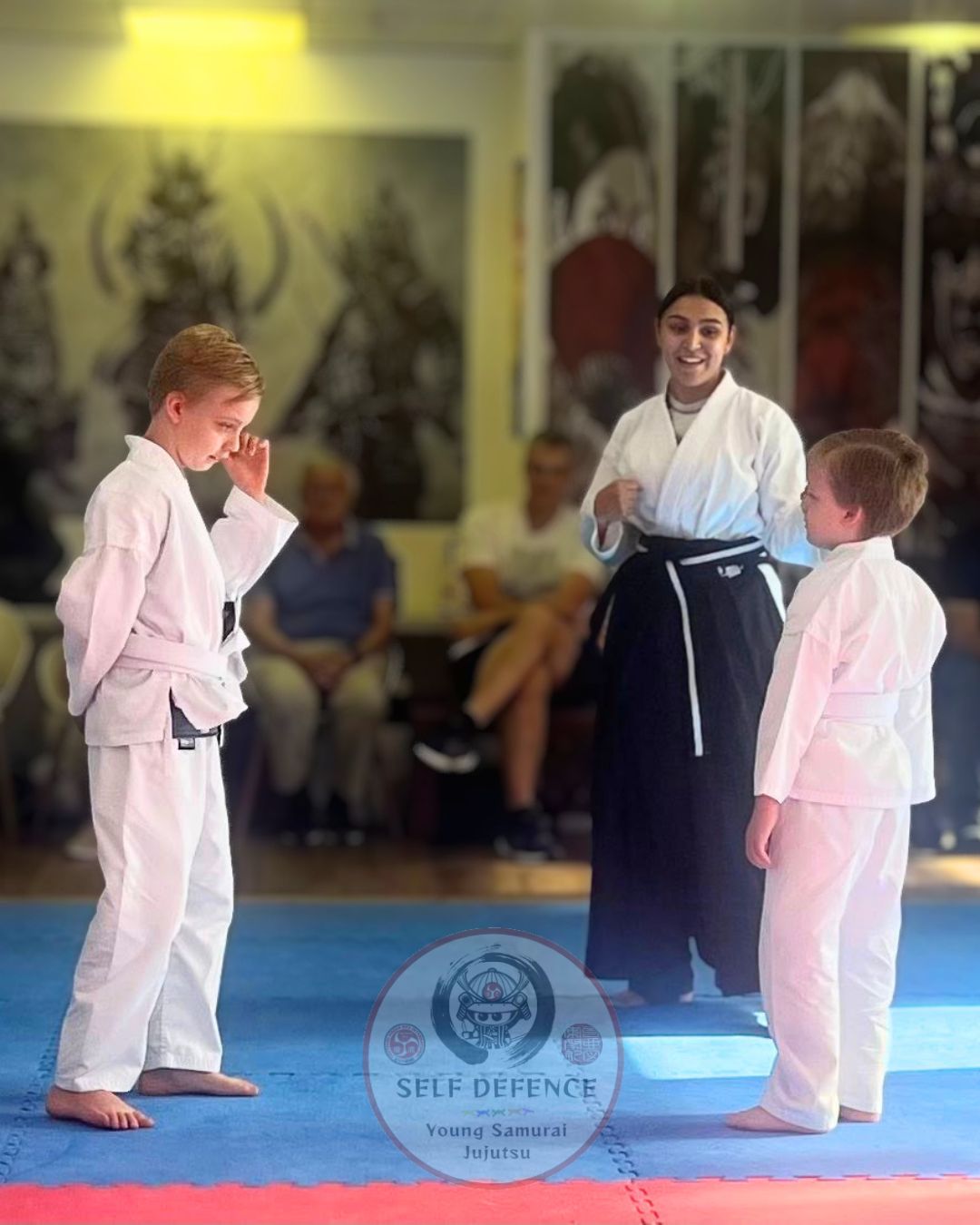
B'Elanna Diaz teaches Monday. Having started as a Young Samurai class member — she knows what it's like to be a kid on these mats.
Andre Diaz teaches Tuesday. Andre is the dojocho — the head of the dojo — and has been training in this tradition since 1985. He teaches every adult class here too. The children aren't handed to a junior assistant; they're taught by the person who runs the school.
What parents ask
Is it safe for young children?
Yes. The curriculum is scaled to children. Techniques are drilled slowly, with the instructor correcting directly. The first thing every child learns is how to fall safely — before any throwing or locking technique is introduced. Classes are small. Children train with other children.
Will my child get individual attention?
Yes. Small classes mean the instructor works with every child in every session. A new child follows a foundational sequence at their own pace, with the instructor moving between students and correcting as they go.
What is the class culture like?
Calm and structured without being harsh. Children are expected to pay attention and try. They're not expected to be perfect. The environment is purposeful but warm — children know what they're there for, and there's enjoyment in that.
Will it conflict with school or other activities?
Classes run Monday and Tuesday at 5pm for one hour. Most children start with one class per week. There's no minimum attendance requirement and no lock-in contract.
What does it cost?
Covered in the conversation. No joining fee.
My child is nervous about trying something new.
That's normal and expected. The first class is a free trial — if your child is unsure after that, a second free trial often settles it. Once the room isn't unfamiliar any more, you see a different child. We're not in a hurry.
Can I stay and watch?
Yes. There's a viewing area off the mats. You're welcome every class.
The tradition behind the programme
JAN DE JONG.
Young Samurai is grounded in the Jan de Jong tradition — a lineage of Japanese jujutsu that has been taught in Perth since 1952. Jan de Jong opened his school here in that year and taught continuously for more than half a century. The curriculum children train at SDCD today is built on the same foundations he developed and refined across a lifetime of teaching.
The junior grading system — the five mon grades your child works through — was developed by Jan de Jong in 1978 specifically for children. It has been part of the tradition ever since.
Today that tradition is taught and graded within the Tsutsumi Hozan Ryu International programme, under the lineage of Hans de Jong — Jan's son, who still teaches and still comes to this dojo.
A real curriculum, built for children
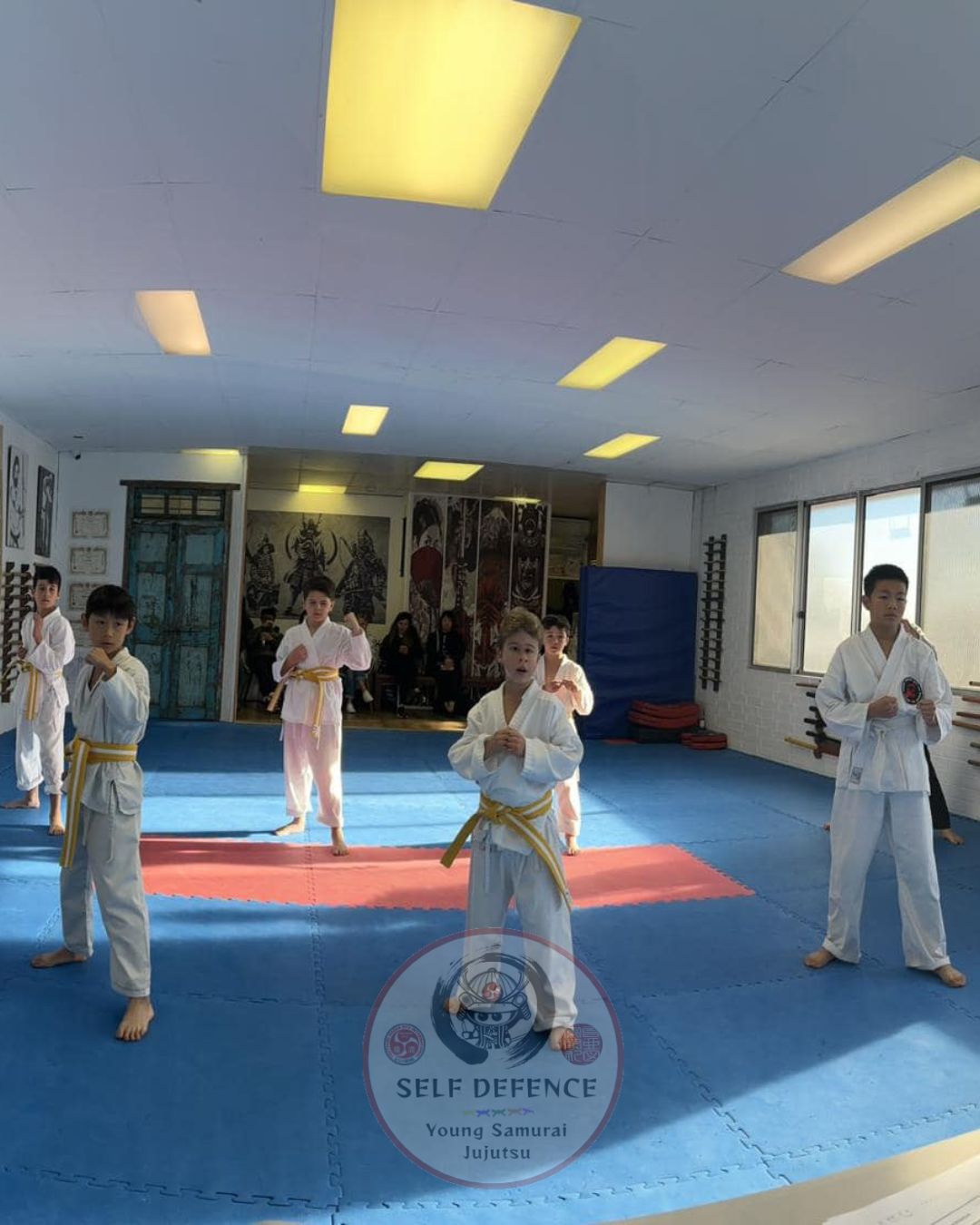
Young Samurai is Goshin Jujutsu — the same self-defence jujutsu the adults train at this dojo, structured for children through the mon grading system.
There are five junior grades, from 1st Mon to 5th Mon. Each builds the fundamentals: how to fall safely, how to move, how to block and strike, how to unbalance an opponent, how to apply a lock. A child starting at 1st Mon learns two breakfalls and a handful of defences. By 5th Mon they're defending against punches, kicks, grabs, even a stick — responding by reflex, working against more than one attacker.
At the junior level the standard is honest: a child can apply what they've learned effectively against another child.
When a child is ready — and at least 13 — they move from the junior grades into the adult grades. There the standard changes: the technique now has to work against an adult. The Goshin Jujutsu foundation they built as a child carries straight through. Nothing is unlearned.
What they will experience
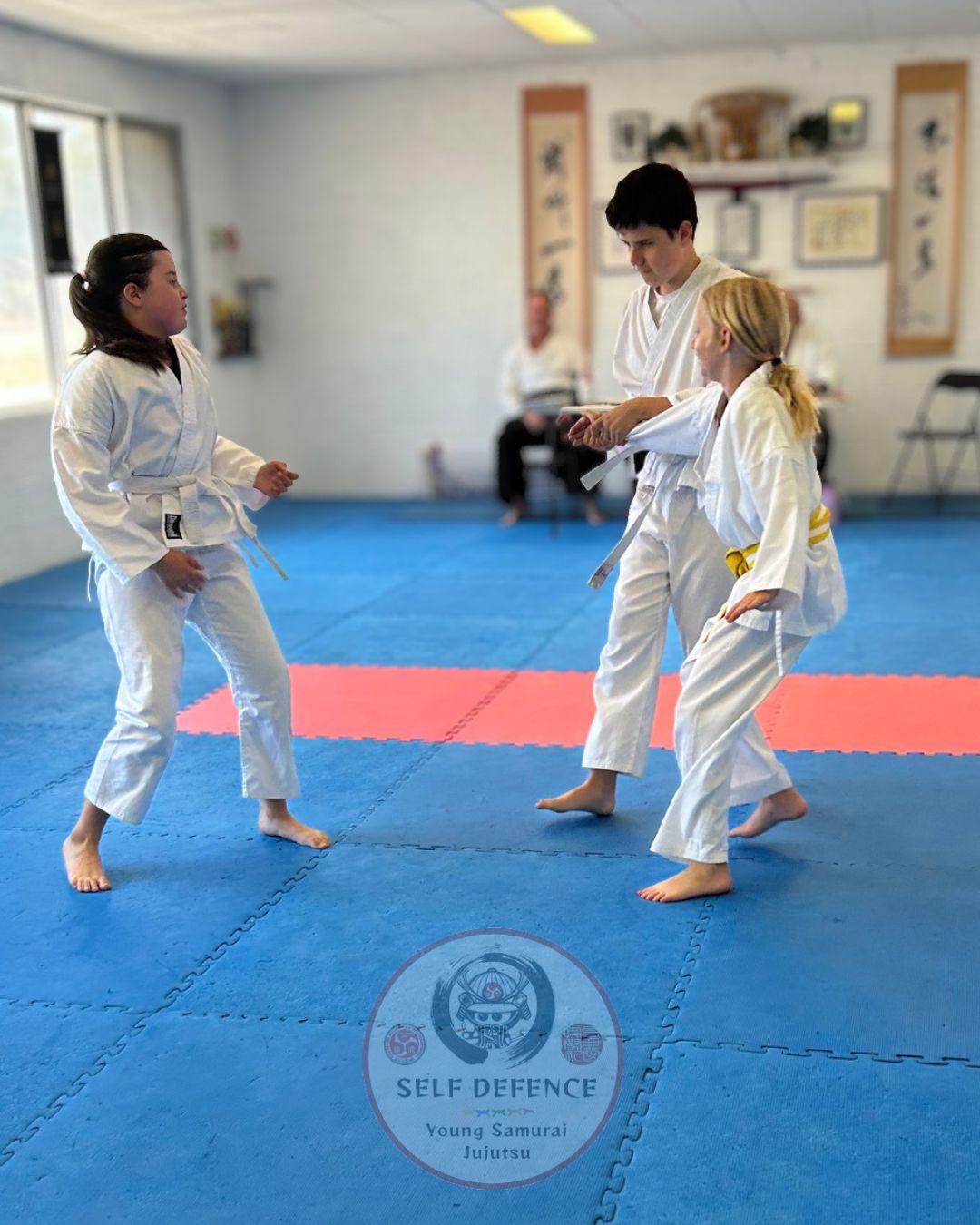
Classes run for an hour.
They start with warm-up and breakfalls — learning to hit the mat safely is the first thing any jujutsu student learns, child or adult.
From there, children work through the techniques for their grade, usually in pairs, with the instructor moving between them and correcting as they go.
It's structured, but it's not grim. Children are children. There's focus and there's enjoyment, and the two aren't in conflict.
You're welcome to watch
There's a viewing area off the mats.
Parents are welcome to stay and watch any class — first one or hundredth.
You don't have to drop and go. If you'd rather see exactly what your child is doing and who's teaching them, sit and watch. Most parents do, at least at the start.
The first class is free
The first class is a free trial.
To book it, there's a short waiver to sign beforehand — standard for any martial arts class, and we'll send it through when you message.
Bring your child in comfortable clothes they can move in — long sleeves and long pants, bare feet on the mat. They join in, you watch from the viewing area, and afterwards you get a sense of whether it suits them.
One thing worth knowing: a lot of children are nervous in their first class. A new room, new faces, not knowing what to expect — that's normal, and it isn't a verdict. If your child enjoys it, great. If they're unsure, a second free trial often settles it — once the room isn't unfamiliar any more, you see a different child. We're not in a hurry, and neither are you.
A note on age
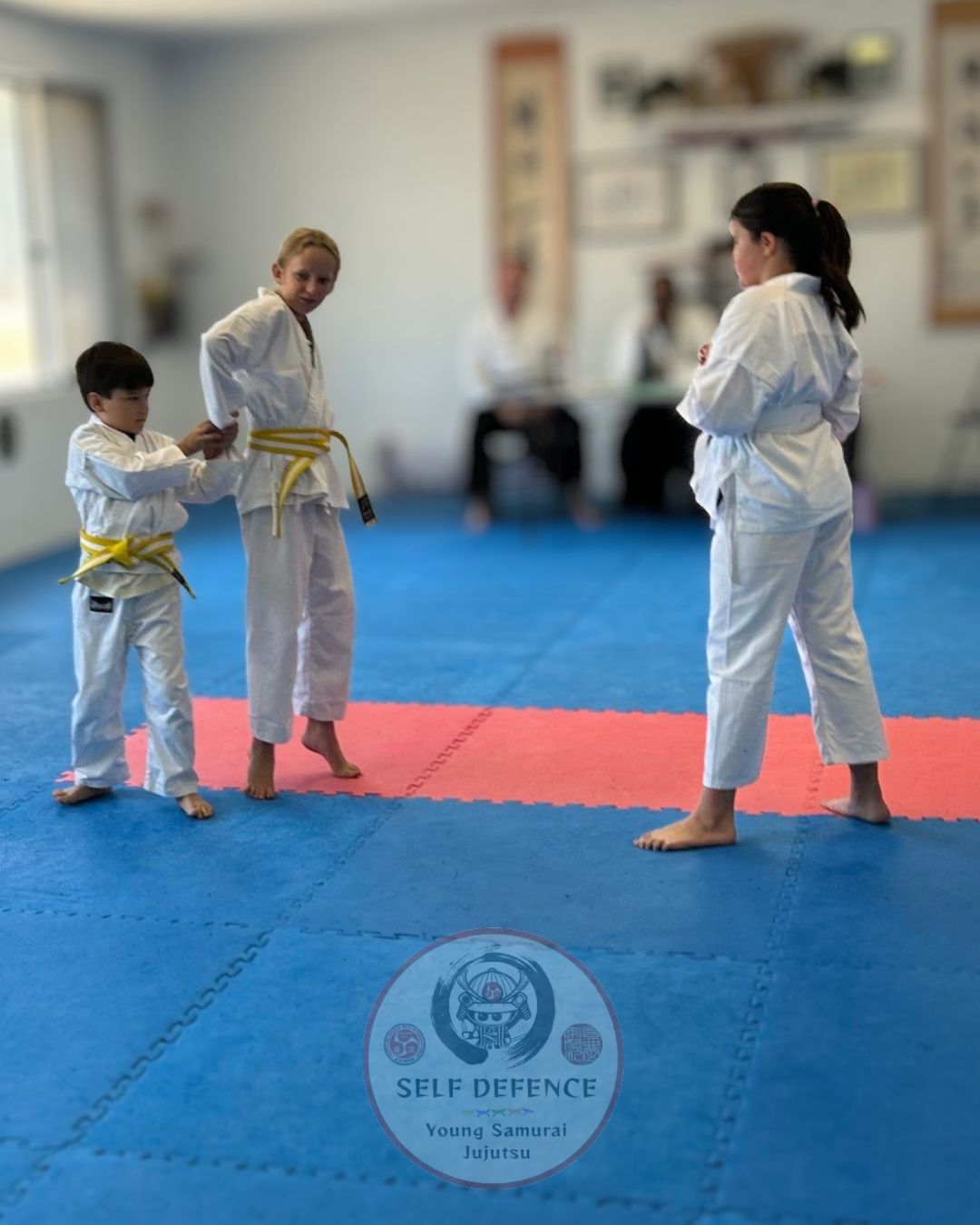
Young Samurai is for children roughly 6 to 12, but the edges are flexible and worth a conversation.
A child who's nearly 6 is usually fine. A child who turns 12 partway through will see their current grading through — the move up is managed around the child, not the calendar. It depends on the child: their size in class, their grade, how they're training. We'd rather get that right than apply a rule.
When the time does come to move up, it's a small step. The teenage and adult classes run at 6pm Monday and Tuesday — the same days as Young Samurai, an hour later. Same dojo, same faces, same routine. One hour on the clock.
This is a children's class, and that's deliberate. A teenager starting fresh belongs in the teenage and adult classes from day one — training against partners their own size, where the training is relevant to them. If your child is 13 or older, that's where they'd start. → Teenagers.
If your child is younger than 6, message and ask — we'll give you an honest answer.
Worth a conversation?
The easiest way to start is a message. Ask anything — whether your child's the right age, what it costs, whether a particular day suits, or just whether it sounds like a fit.
Tap the icon to start a conversation —
SMS, DM (Instagram, Facebook, WhatsApp), or email
SELF DEFENCE CENTRAL DOJO
Unit 7a, 44 Hutton Street, Osborne Park, Perth, WA 6017
Andre: 0431 011 828
© Copyright 2026.All rights reserved.