The people
and the lineage
Who teaches at SDCD
In most martial arts schools a 1st Dan (shodan) black belt represents three to four years of training. In the de Jong tradition, shodan represents approximately a decade of serious, consistent practice. The credentials below reflect that standard.
Story about me.
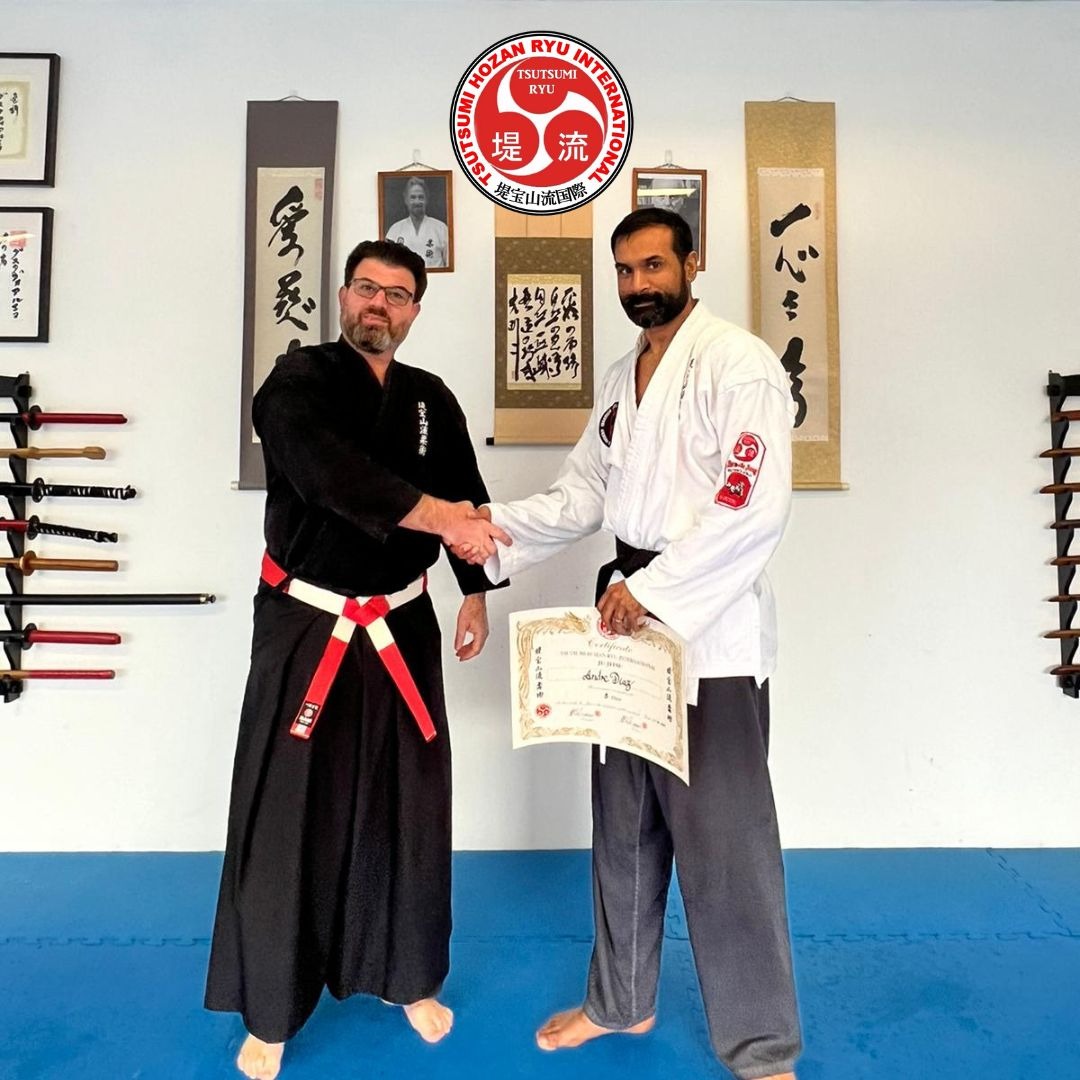
Andre Diaz
Lorem Ipsum has been the industry's standard dummy text ever since the 1500s, when an unknown printer took a galley of type and scrambled it to make a type specimen book.
Anil
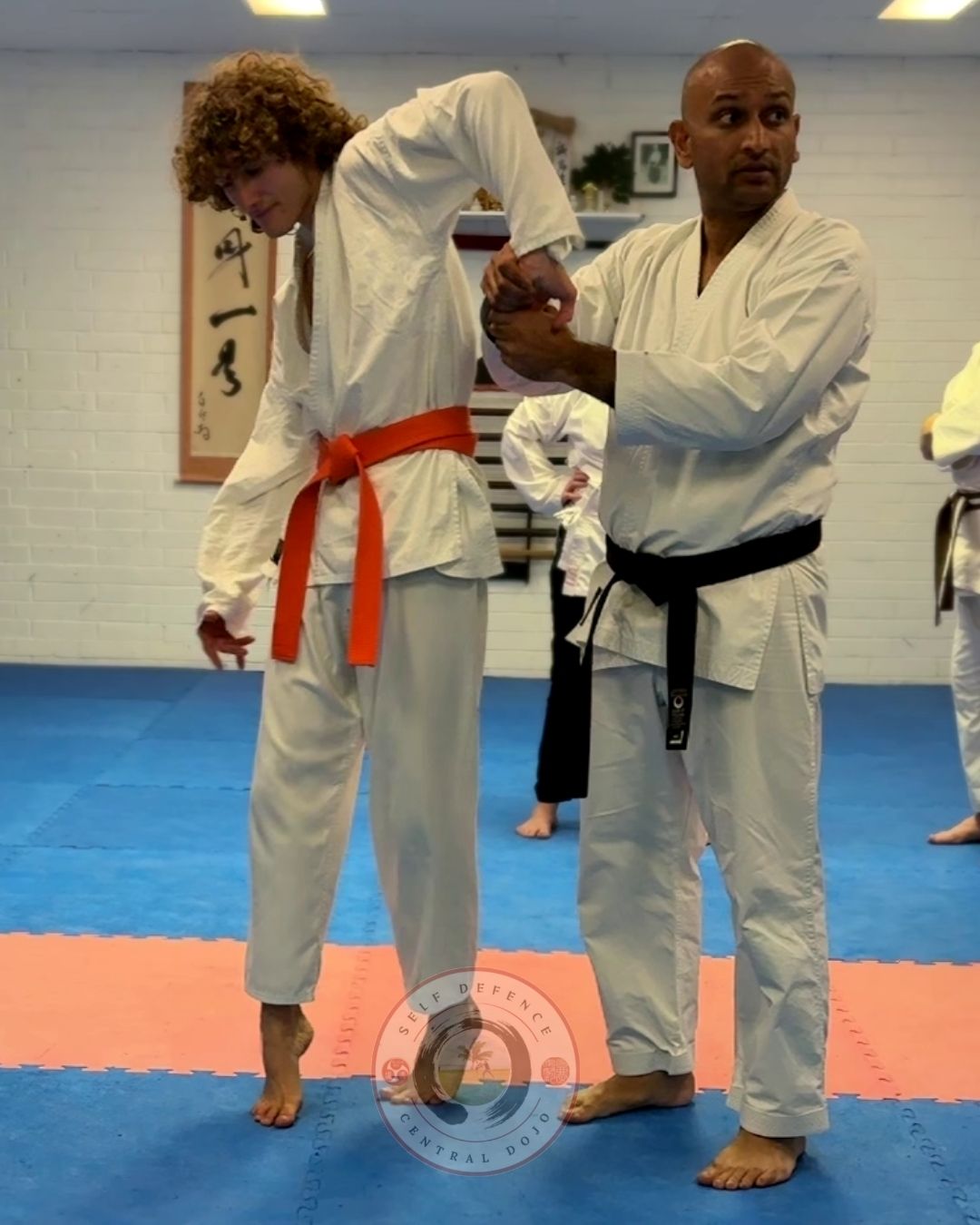
Anil has trained and taught at Self Defence Central Dojo, contributing to the development of students in both arts. His journey in martial arts reflects a strong commitment to discipline, self-defence, and the preservation of traditional techniques. In addition to his martial arts expertise.
- 1st Dan – Tsutsumi Hozan Ryu International Jujutsu
- 1st Dan – Shotokan Karate Tadashii-Do Netherlands
- 4th Dan Karatenomichi World Federation
- Class C - International Examiner
- Class C - International Referee
B'Elanna
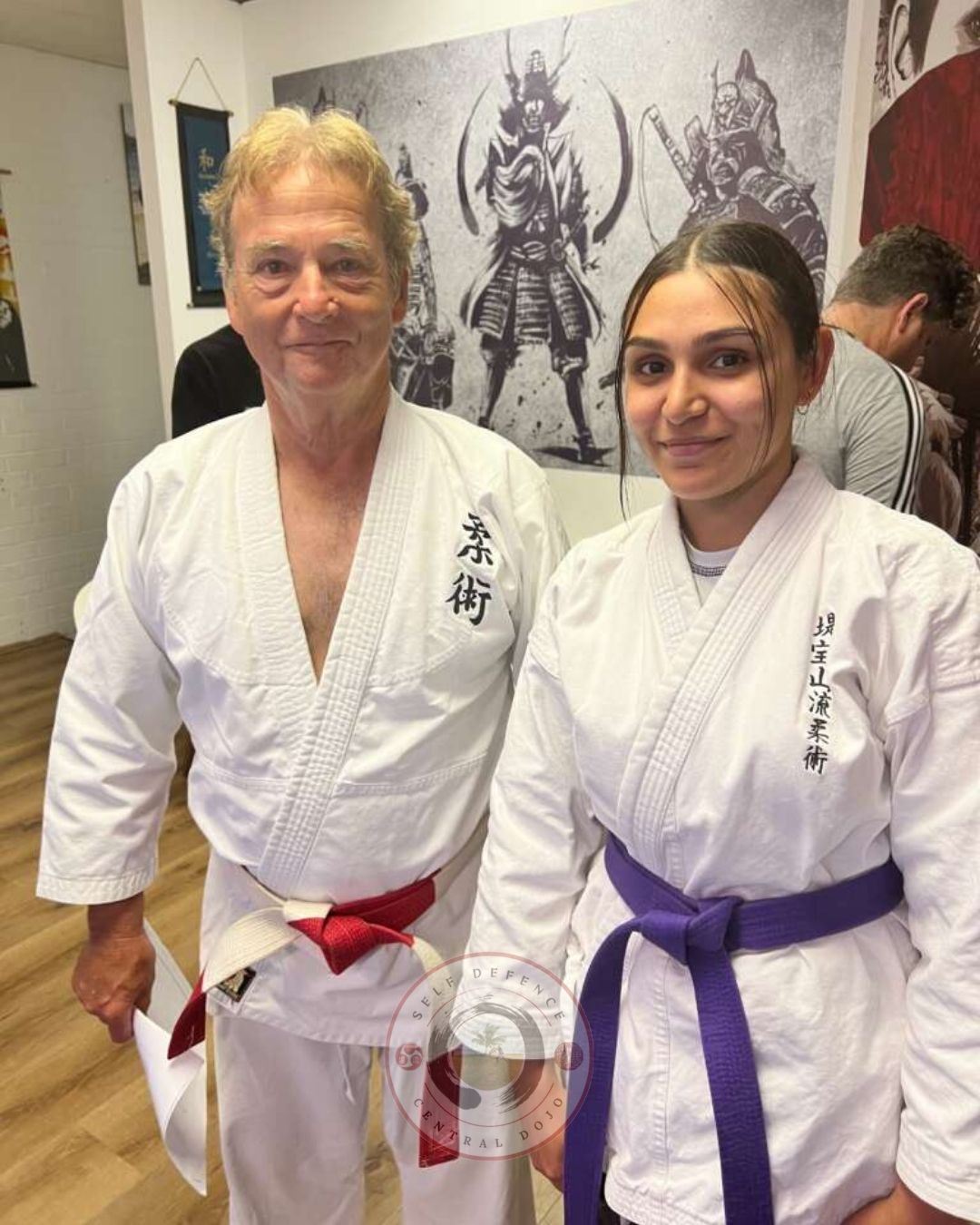
B’Elanna Diaz is a dedicated martial arts instructor and student at SDCD. Specializing in Tsutsumi Hozan Ryu Jujutsu, she leads programs such as the "Empower-HER" women's self-defence workshops, equipping participants with practical skills and confidence to navigate the world safely. In addition to adult classes, B’Elanna contributes to the "Young Samurai" program, focusing on building self-esteem and resilience in children through martial arts training.
- 1st Kyu Tsutsumi Hozan Ryu Jujutsu
- Young Samurai Instructor
- Empower-Her Womens Self Defence Instructor
Jeremy
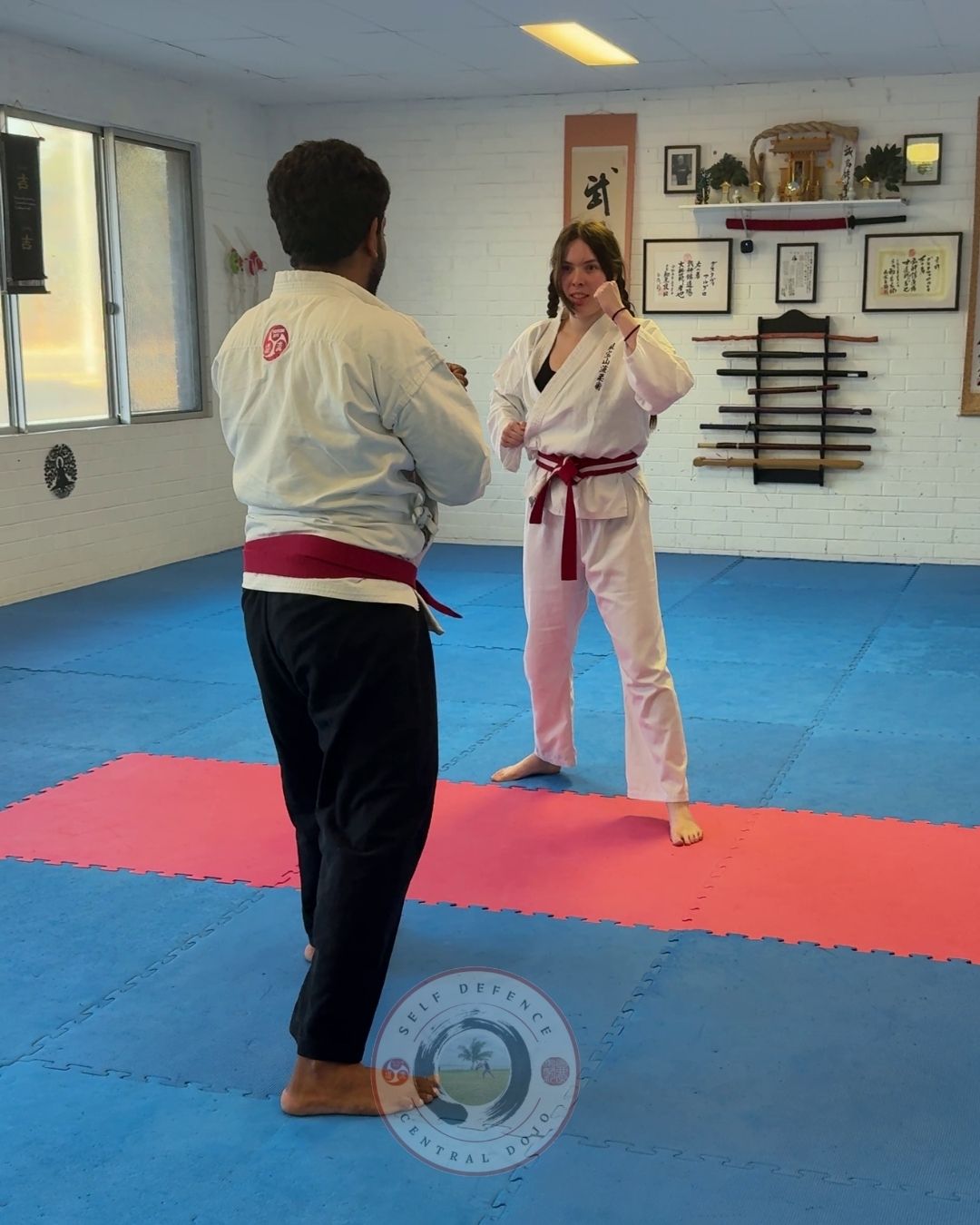
The foundation of everything. Flowing, entering, entering rotation, sliding, dodging — each a precise way of moving the body relative to an incoming attack.
Taisabaki is trained before and alongside every other element of the curriculum. Poor body position makes every technique harder. Correct body position makes most techniques possible without strength. The body movement patterns introduced at 9th kyu are the same ones present at black belt level — the sophistication develops, the principles don't change.
Mason
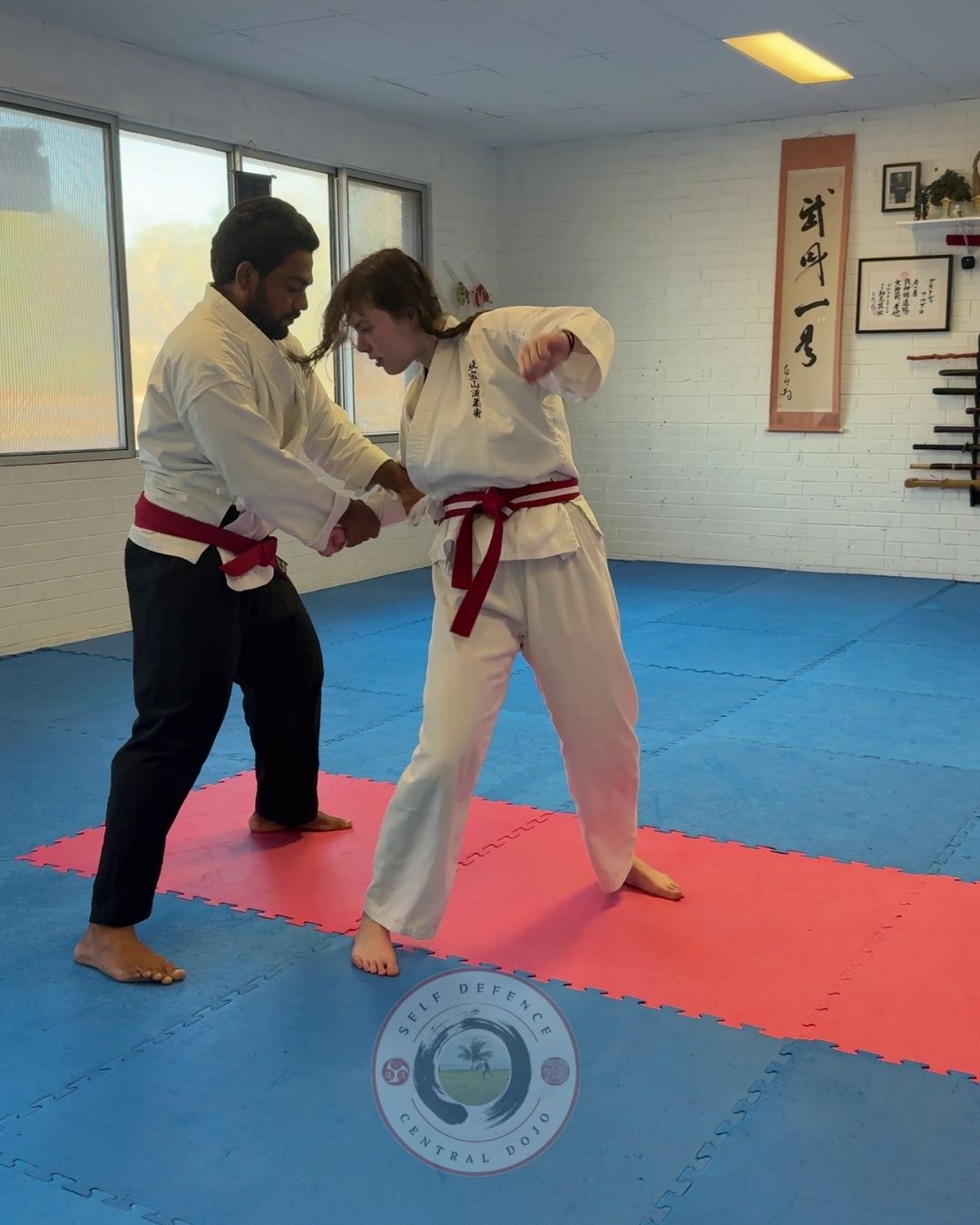
Taking a partner's structural stability before applying technique. From wrist grips, lapel grips, rear holds, pushing and pulling attacks. The basic patterns — normal, same side, reverse, rear — are introduced in the first sessions and developed across years of practice.
The difference between a technique that works and one that doesn't is almost always in the kuzushi preceding it. A joint lock applied without kuzushi requires force. The same lock applied after correct unbalancing requires almost none.
Kansetsu waza — joint locking
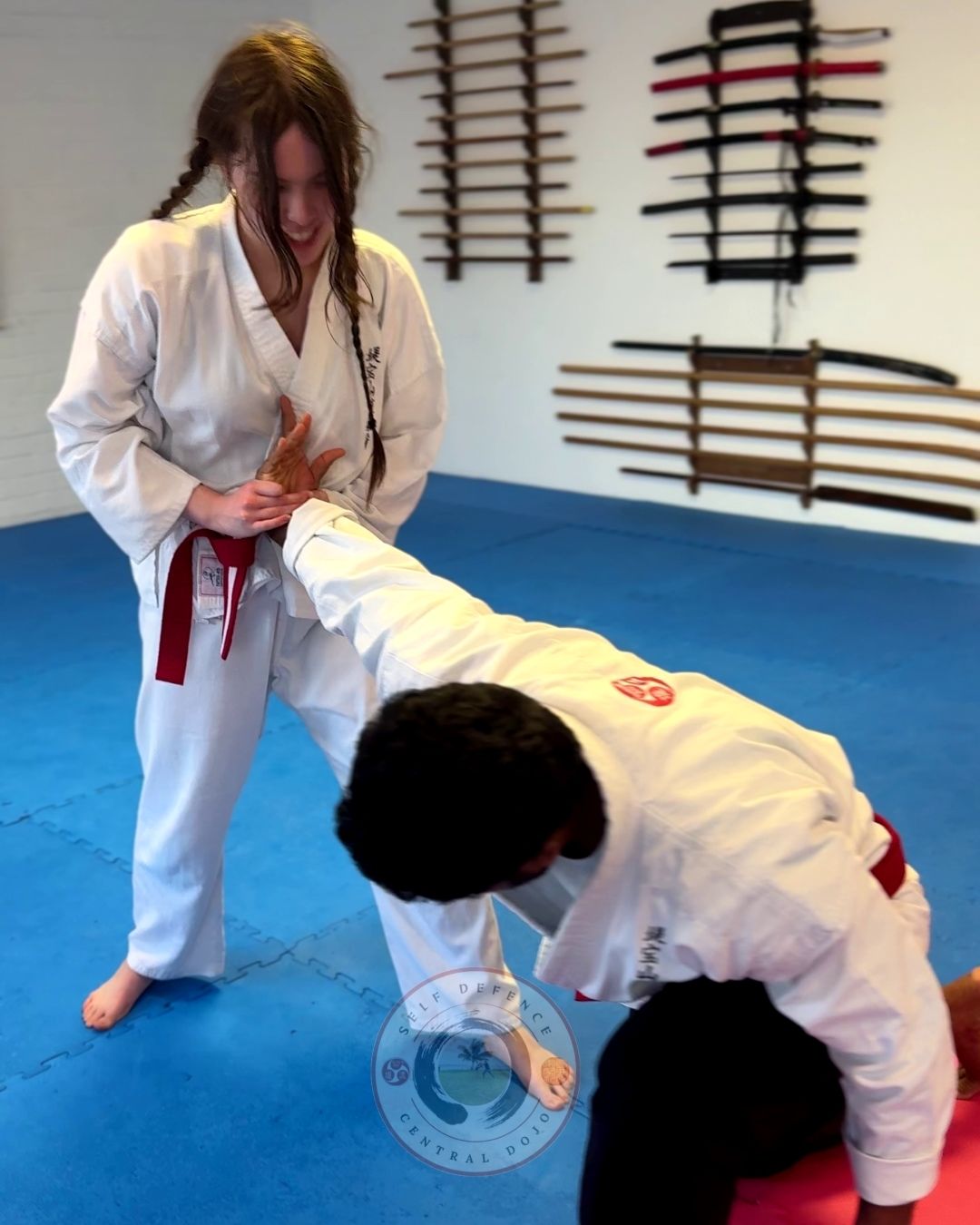
The art's signature category. Nine basic joint locks covering the wrist, elbow, and shoulder — introduced progressively across the first three adult grades. Applied standing, in transition, and on the ground.
The locks don't require strength. They require precise understanding of joint structure and leverage. That precision is what's being developed across the early grades — and what continues to develop across years of serious practice.
From the very first grading, joint locking is demonstrated against two attackers — not as free fighting, but as a structured test of applying technique while managing more than one person. That requirement is present from 9th kyu.
Nage waza — throwing
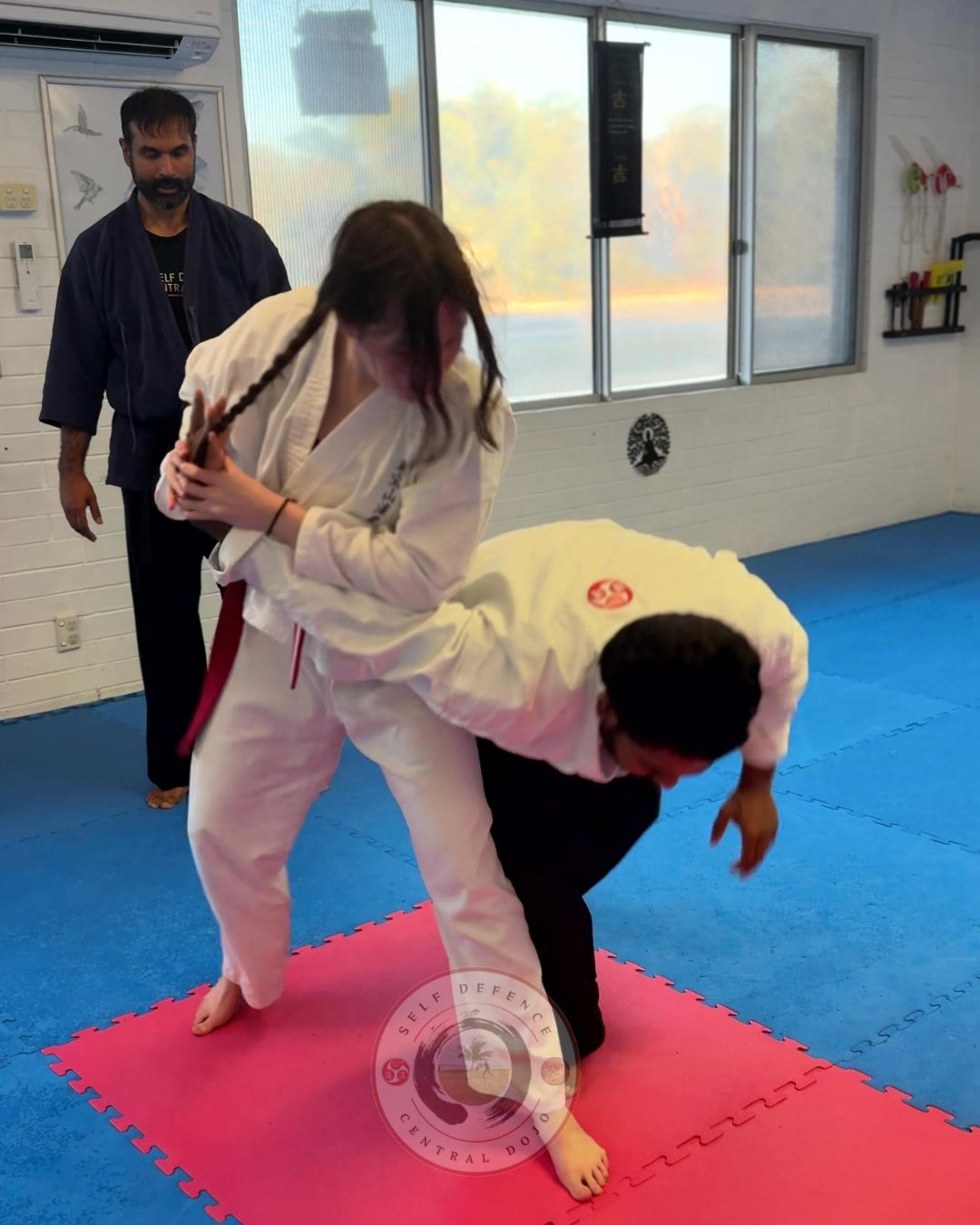
Hip throws, shoulder throws, foot sweeps and reaps. Throwing techniques are introduced at 7th kyu — the third adult grade — after the body movement and unbalancing foundations are established.
That sequencing is deliberate. A throw is the consequence of correct taisabaki and kuzushi, not a technique applied in isolation. Students who understand the three-phase logic find throws arrive naturally once they are introduced. Students who try to throw without that foundation find they don't work.
Shinken shobu no kata — Reflex
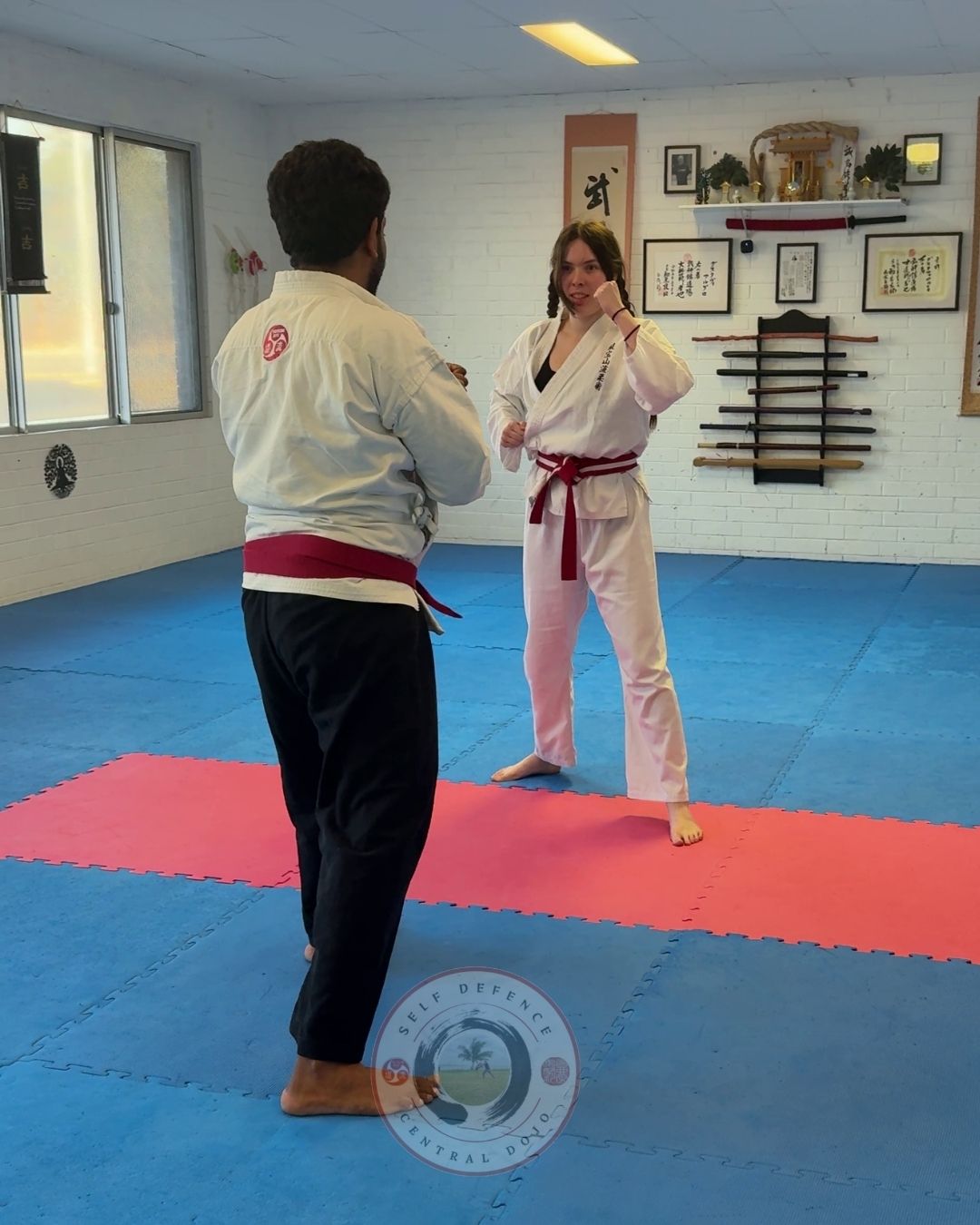
A unique feature of the de Jong system not found in other jujutsu schools. Structured free-response defence sequences against realistic attacks — grips, strangles, punches, kicks, ground scenarios. Present from the first adult grading.
Weapon awareness — stick and knife defences — is introduced from the second adult grade, once the foundational empty-hand responses are established.
The reflex section grows with each grade. Five attack scenarios at the first grading. Ten at the second. Fifteen at the third. Thirty by the fourth grade. The curriculum is designed to progressively expand what the student can respond to, not just what they can demonstrate in isolation.
Every defence can be required left or right, inside or outside. The grading tests genuine adaptability, not pattern memorisation.
Randori — multiple attackers
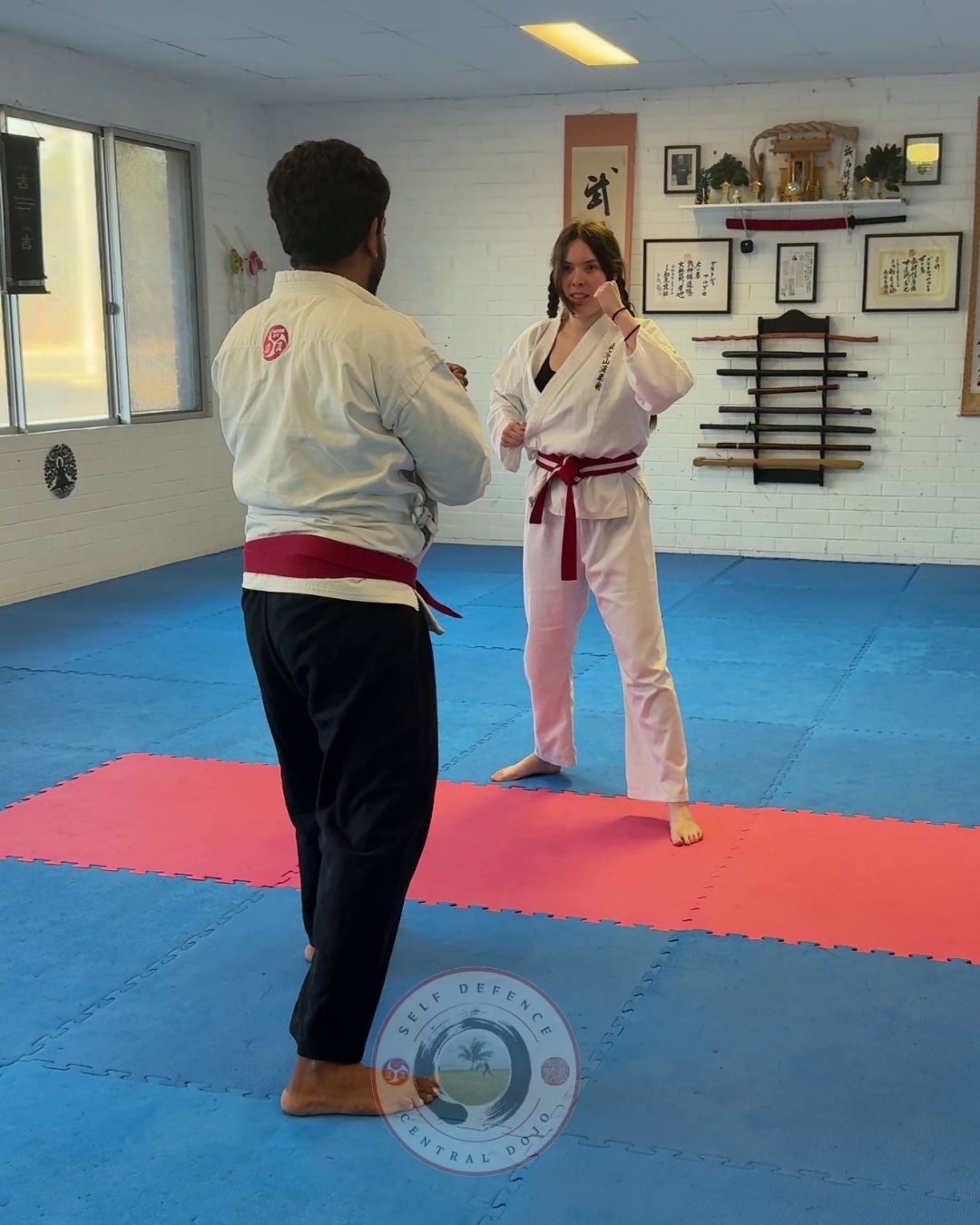
This form of practice, against multiple attackers is there for you to take the skills you learn in paired practice and apply them while moving, adjusting, and reading your partner — without needing intensity or sparring.
The depth
The curriculum runs from beginner kyu grades through to dan grades and beyond — including separate streams for weapons work in Kobudo (Weapons) and Kenjutsu ( Japanese sword).
The full grading structure is one of the most extensive in traditional martial arts.
Reaching black belt in this system takes a serious practitioner approximately a decade of consistent training. That's not a warning. It's a description of how deep the art actually is.
Students who grade through SDCD do so within the Tsutsumi Hozan Ryu International framework — their grades are recognised internationally across affiliated schools in Australia, Europe, and beyond.
Ready to find out if this is for you?
The curriculum described on this page runs through all four programmes at Self Defence Central Dojo.
The decision page for each programme tells you who it's for, what the first session is like, and how to start a conversation.
→ Adults — 16 and over, ongoing classes
→ Teenagers — 13 to 15, training in adult classes
→ Young Samurai — children 6 to 12
Or if you're already in a conversation with us — reply in the DM and we'll take it from there.
Tap the icon to open start a
SMS, DM (Insta, FB, WhatsApp) email..
SELF DEFENCE CENTRAL DOJO
Unit 7a, 44 Hutton Street, Osborne Park, Perth, WA 6017
Andre: 0431 011 828
© Copyright 2026.All rights reserved.