JAPANESE JUJUTSU
Self Defence Central Dojo
Osborne Park, Perth
Your teenager has found this page — or you have. Either way, this is the information you need to decide.
What this is
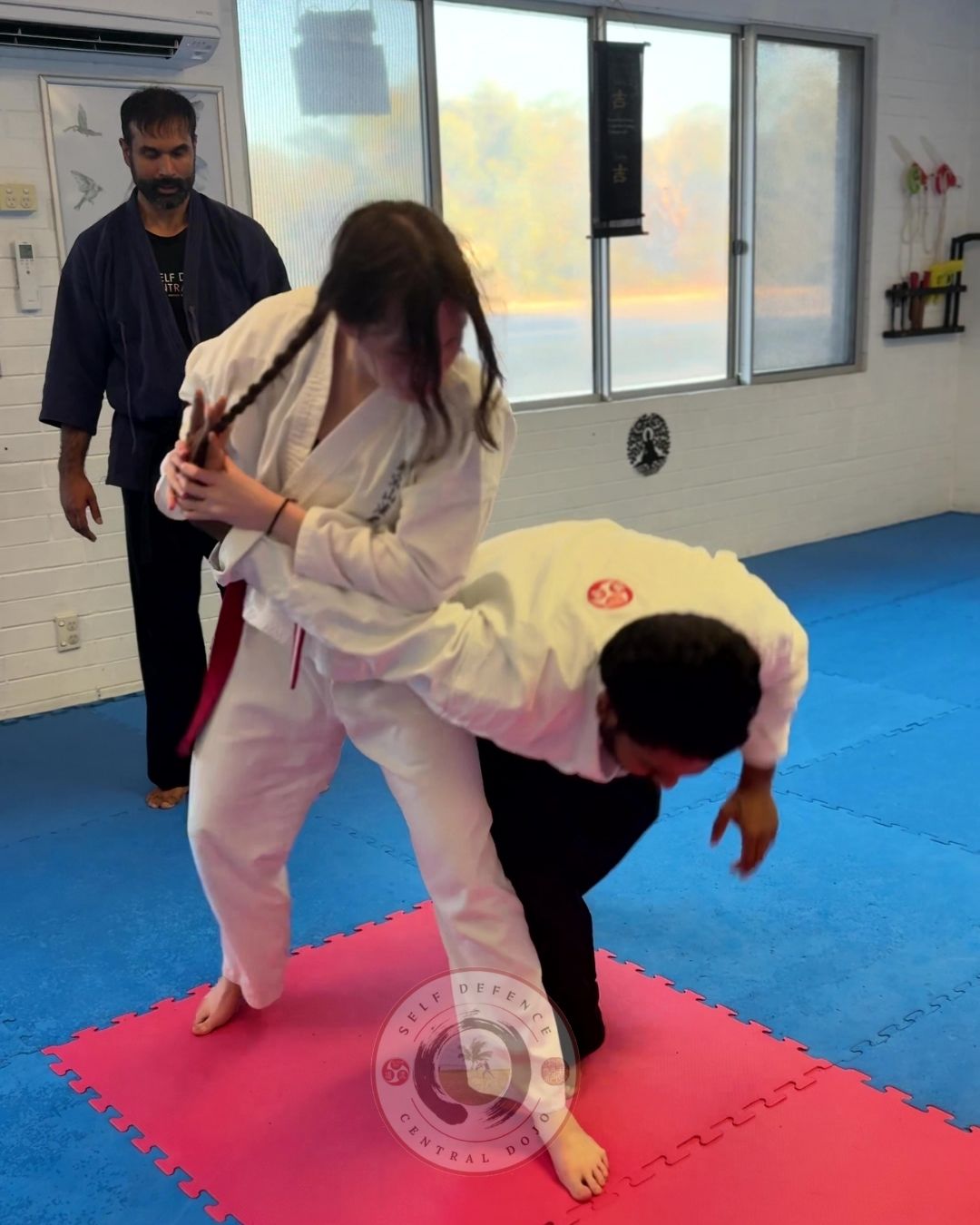
What is taught here at SDCD is Goshin Jujutsu — modern self-defence-oriented Japanese jujutsu — joint locks, throws, strikes, ground work. Partner-based. Technical.
No competition. No tournaments.
Teenagers 13 and over train in the regular adult classes alongside men and women of all ages. Not a separate youth programme. The same curriculum, the same instructor, the same expectations — scaled to where each student actually is, not to their age on a marketing brochure.
That's unusual. It's also how this dojo has worked since it opened.
The de Jong tradition
FOUR GENERATIONS UNBROKEN.
Jan de Jong. Hans de Jong. Daniel Newcombe. Andre Diaz.
What you learn at Self Defence Central Dojo came down a direct line — instructor to student, four generations deep — from the man who brought this art to Perth in the 1950s.
Jan de Jong established his jujutsu school here in the 1950s. Hans de Jong — his son, 8th Dan — trained under his father and carries the tradition forward. Daniel Newcombe trained under Hans as his senior student, was awarded the title of Shihan, and established the Tsutsumi Hozan Ryu International (THRI) programme to extend the tradition beyond Western Australia. Andre Diaz trained under Hans in the same line. His 3rd Dan was awarded by Daniel Newcombe within the THRI programme.
Two relationships. One lineage.
Hans and Daniel Newcombe still teach — and still come to this dojo.
What parents ask themselves
Is it safe training alongside adults?
Yes. The training is cooperative and partner-based — not competitive or combative. Techniques are drilled slowly with direct instructor feedback. Falling safely is taught before anyone is thrown. There is no sparring until a student is technically ready for it, which takes months.
Andre teaches most class himself. He knows every student by name. Class sizes are small — usually eight to twelve students. The adult training partners are experienced practitioners who take the work seriously. They are not there to test the newest student.
Will my teenager get individual attention?
Yes. Small classes and direct instruction mean Andre works with every student in every class. New students — regardless of age — are paired with a senior student for the first four to six sessions, following a defined foundational sequence at the new student's pace.
What is the class culture like?
Structured and serious without being intense or hierarchical. There is no culture of seniors demonstrating to beginners how far they have to go. There is no performance. The dojo is a working training environment where people of different ages and levels work alongside each other without ego.
Will this conflict with school?
Classes run Monday, Tuesday, and Wednesday evenings at 6pm, plus Saturday mornings at 9am. Most teenagers start with one class per week, choosing the day that fits their schedule. There is no minimum attendance requirement and no contract.
What does it cost?
Fees are covered in the DM conversation. There is no joining fee structure designed to lock anyone in.
Will my teenager be the only one their age?
Not necessarily — several teenagers train at the dojo alongside adults. But even if your teenager is the only teen in a particular class, the environment is designed for exactly that situation. B'Elanna Diaz has trained here since childhood and knows what it feels like to be the youngest person in an adult class.
What they will experience
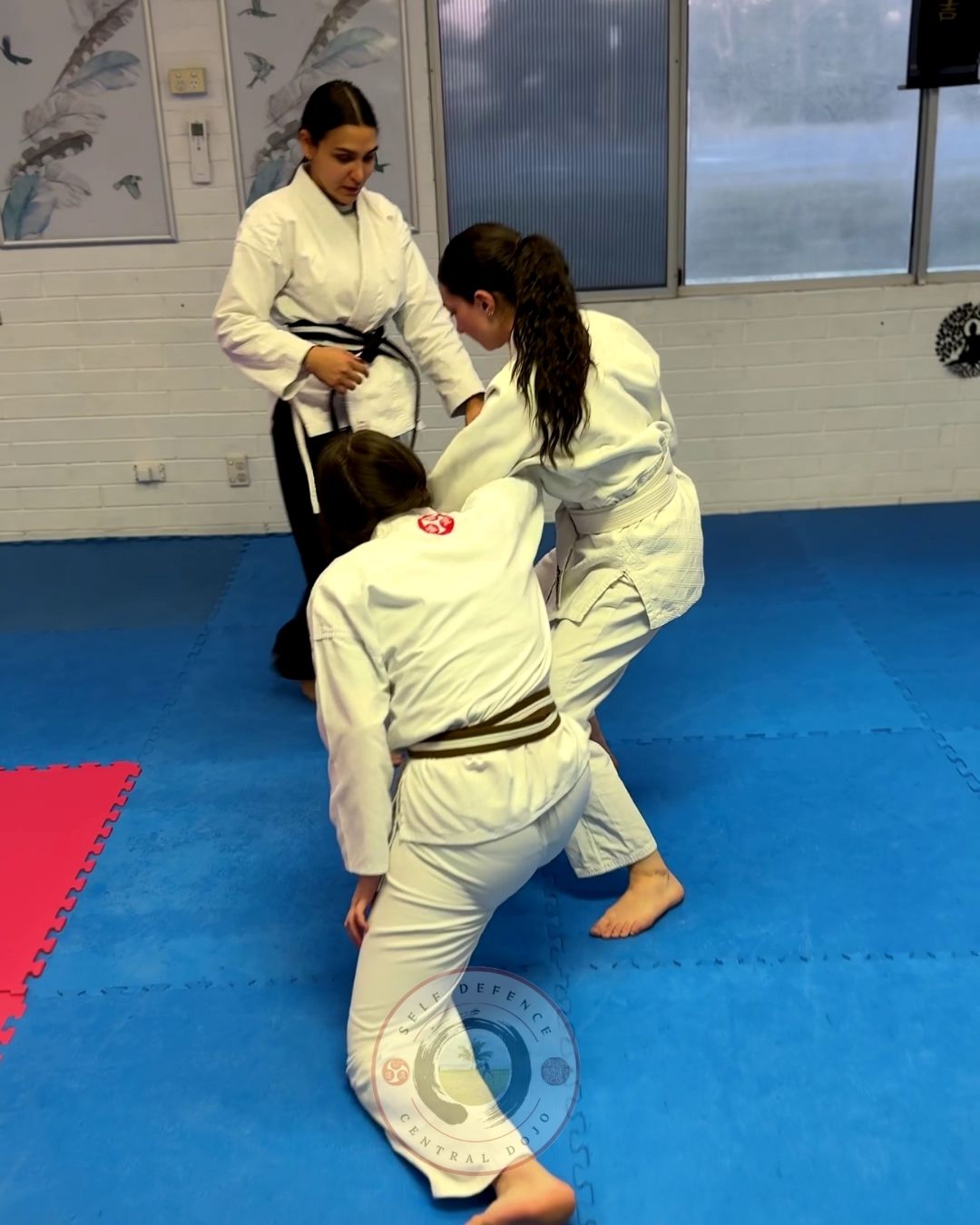
In a moment when many parents are thinking carefully about what their teenagers do with their time — what's real, what's structured, what involves actual people in an actual room — this is worth naming plainly.
Your teenager will spend one hour per week learning a physical skill with a defined curriculum, under direct instruction from an experienced teacher, alongside adults who take the work seriously. No screens. No algorithms. No performance pressure calibrated to produce anxiety.
What they encounter instead: the deliberate repetition of technical movement, direct feedback from an instructor who knows their name, and the gradual experience of becoming capable at something genuinely difficult.
Most teenagers find the adult class environment less intimidating than expected — and more engaging than they anticipated.
The dojo
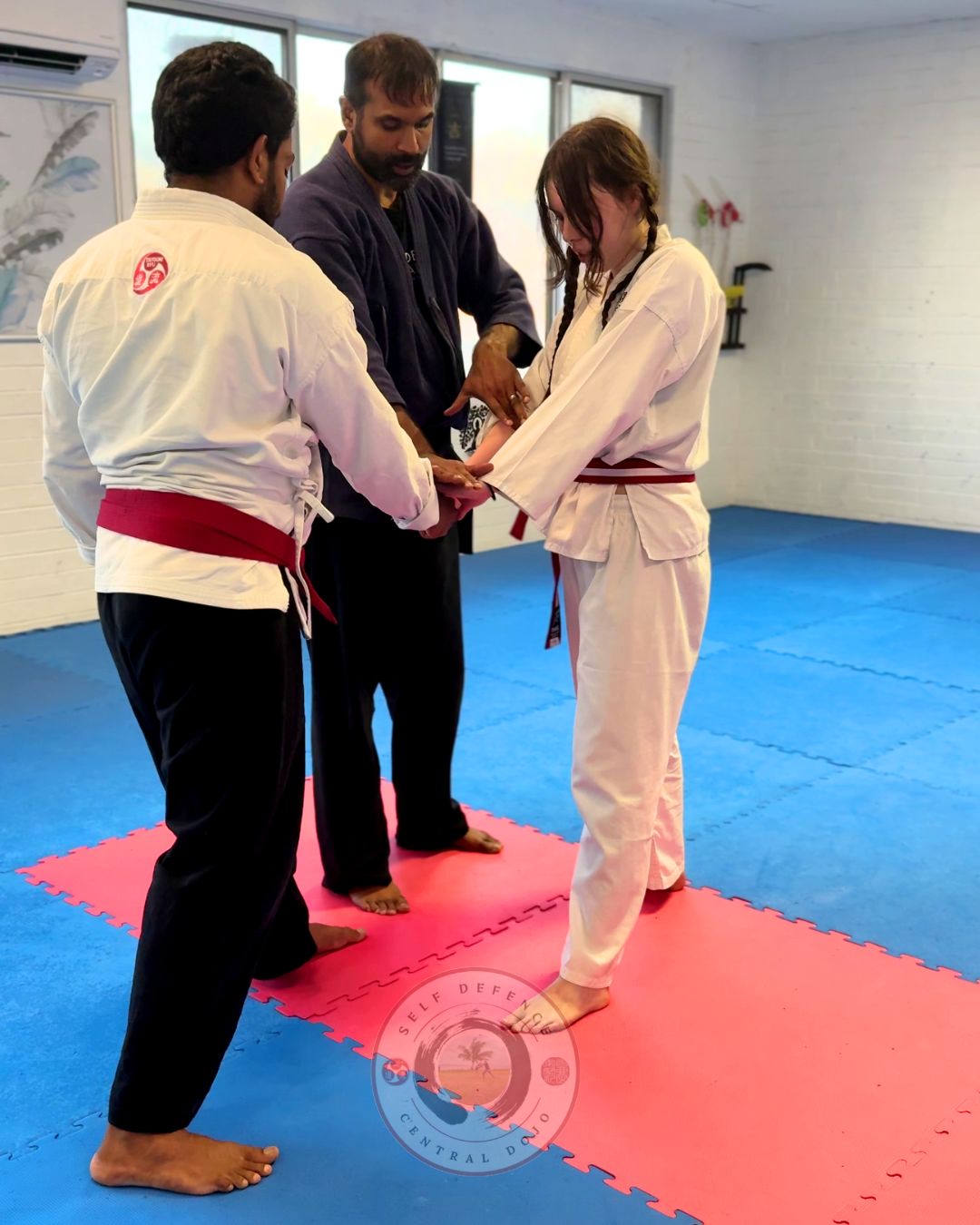
Andre Diaz has been training in this tradition since 1985. He teaches most class himself.
Class sizes are small and often a range of ages and capabilities in class. The small class size means you get the instruction that is right for you in that very moment you need it.
Classes run Monday, Tuesday, and Wednesday at 6pm, plus Saturday at 9am.
We have a female only class Wednesday at 5pm.
Most people start with one class per week.
Osborne Park — Unit 7a, 44 Hutton Street.
Free parking outside.
Air conditioned.
Viewing area if you want to watch
Worth a conversation?
If what you've read suggests this might suit your teenager, the most useful next step is a short conversation.
Ask about pricing, schedule, what the first session looks like, whether the programme is appropriate for your teenager's specific situation. Andre will reply directly.
If your teenager wants to get in touch or you'd like to share this with them:
Tap the icon to start a conversation —
SMS, DM (Instagram, Facebook, WhatsApp), or email
SELF DEFENCE CENTRAL DOJO
Unit 7a, 44 Hutton Street, Osborne Park, Perth, WA 6017
Andre: 0431 011 828
© Copyright 2026.All rights reserved.